
 Recommended On

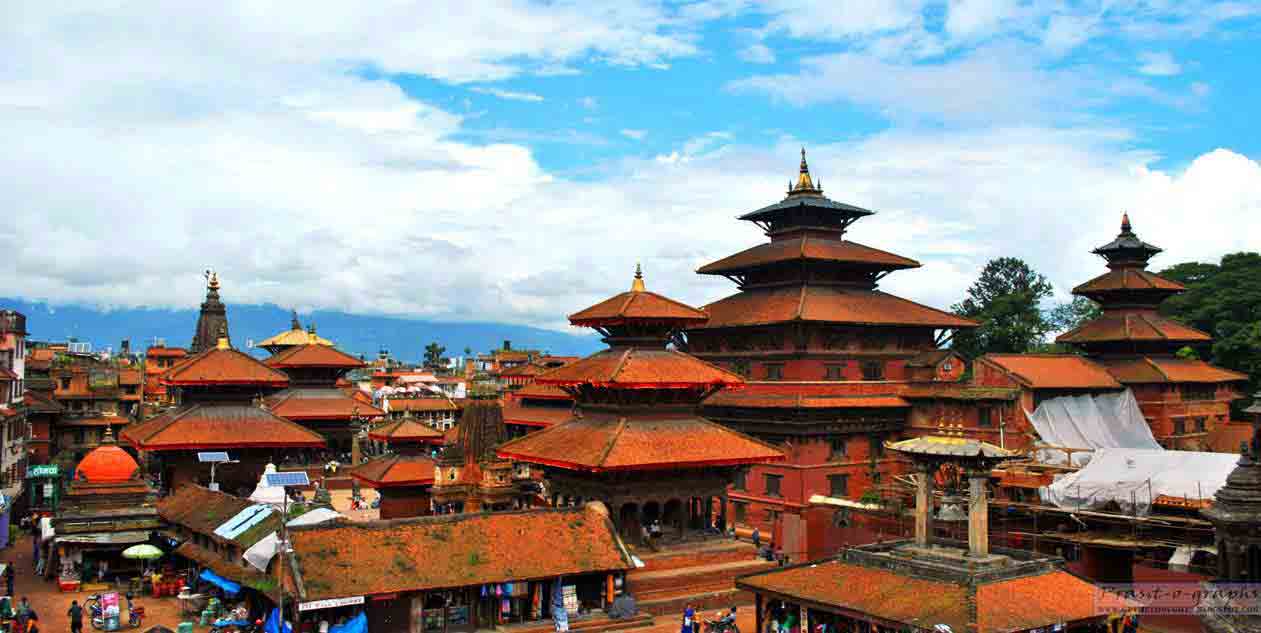
Kathmandu city is the capital of Nepal and the main gateway for travelers entering the Himalayas. If you are asking where Kathmandu city is, it is located in central Nepal within the Kathmandu Valley, a bowl-shaped valley between India and China (Tibet), at an elevation of about 1,400 meters above sea level.
Kathmandu city is the political, cultural, and tourism hub of Nepal. It is home to Tribhuvan International Airport, the country’s only international airport, and most trekking journeys to Everest, Annapurna, Langtang, and Manaslu start from here. Areas like Thamel handle most trekking permits, guides, and travel logistics.
The city is part of the larger Kathmandu Valley, along with Lalitpur and Bhaktapur, and contains major UNESCO World Heritage Sites such as Pashupatinath, Boudhanath, and Swayambhunath, making it both a travel base and a cultural center of Nepal.
Introduction to Kathmandu City
Kathmandu city is located in central Nepal, inside the Kathmandu Valley, which sits in the Himalayan foothill region between India and Tibet (China). It is geographically positioned at approximately 27.7°N latitude and 85.3°E longitude.
Kathmandu city is part of the Kathmandu Valley system, along with Lalitpur (Patan) and Bhaktapur, forming the main urban and administrative core of Nepal.
Quick facts about Kathmandu
Kathmandu city operates as both a metropolitan capital and a high-density valley settlement, with population distribution concentrated heavily inside the Kathmandu Valley core rather than evenly across the wider district areas.
-
Kathmandu elevation and altitude: ~1,300-1,400 meters above sea level, with slight variation across the valley floor
-
Population of Kathmandu Valley: roughly 3-4 million residents across Kathmandu, Lalitpur, and Bhaktapur combined (urban agglomeration level)
-
Total area of Kathmandu Metropolitan City: about 49.45 km² within administrative boundaries
-
Official language: Nepali (widely used), with Nepal Bhasa (Newari) commonly spoken in heritage zones
-
Currency and time zone: Nepalese Rupee (NPR), Nepal Time (UTC +5:45), one of the few time zones with a 45-minute offset globally
-
Kathmandu’s identity: historically known as the “City of Temples” due to its dense concentration of pagoda-style Hindu and Buddhist architecture within a compact urban grid
Why Kathmandu is important in Nepal
Kathmandu city functions as the central system of Nepal rather than just a capital in name. Most national-level services, institutions, and travel logistics are concentrated inside the Kathmandu Valley.
-
Political center of Nepal: Government institutions, ministries, and federal administration are based in Kathmandu city
-
Economic and business hub: Main banking headquarters, trade offices, and commercial markets are concentrated in areas like New Road and Putalisadak
-
Cultural and religious core: Major heritage sites such as Pashupatinath Temple, Boudhanath Stupa, and Swayambhunath define national identity and daily religious practice
-
Starting point for trekking and expeditions: Most trekking routes including Everest Base Camp, Annapurna Circuit, Langtang Valley, and Manaslu Circuit begin with logistics and permits arranged in Kathmandu
-
UNESCO World Heritage importance: The Kathmandu Valley contains multiple UNESCO-listed sites, making it one of the highest-density cultural heritage zones in South Asia
Kathmandu’s importance is not only administrative, it is the operational base for almost every major movement of people, goods, and tourism inside Nepal.
Kathmandu Location and Geography
Kathmandu's location on the world map
Kathmandu city is positioned in South Asia within Nepal, between the Gangetic plains of India and the Tibetan Plateau of China. This makes it part of a transitional Himalayan zone rather than a coastal or flatland capital.
In global positioning terms, Kathmandu lies roughly in the same longitudinal belt as cities like Delhi, Lhasa, and Dhaka, but its elevation places it in a distinct highland environment compared to most regional capitals.
The city’s geographic placement inside a mountain-surrounded valley creates limited outward expansion, which is why Kathmandu Metropolitan City develops more vertically and inward toward the valley core rather than spreading outward like lowland cities.
Kathmandu Valley overview
Kathmandu Valley is a bowl-shaped tectonic basin formed from an ancient lake that drained through the Chobhar gorge. The valley floor sits at around 1,300-1,400 meters above sea level, making it a highland settlement zone.
It includes three main urban districts:
-
Kathmandu
-
Lalitpur (Patan)
-
Bhaktapur
This combined valley system forms the main urban and cultural core of Nepal. The flat valley floor and surrounding hills also shape how Kathmandu expands and how rivers like the Bagmati flow through the region.
Kathmandu’s surrounding hills and mountains
Kathmandu Valley is enclosed by mid-hill ranges that form a natural boundary around the city, limiting expansion and creating distinct viewpoints from elevated ridges.
Key surrounding hills include:
-
Shivapuri Hill (2,732 m): Northern boundary of the valley, part of Shivapuri Nagarjun National Park
-
Phulchoki Hill (2,762 m): The highest hill around Kathmandu, known for clear Himalayan visibility
-
Chandragiri Hill (2,551 m): Western ridge with cable car access and mountain viewpoints
-
Nagarjun Hill (2,128 m): Forested hill close to the city, part of the national park zone
On clear days, distant Himalayan ranges like Langtang Himal and Ganesh Himal are visible from these elevated points, depending on seasonal air clarity and monsoon conditions.
Rivers and natural landscape
Kathmandu Valley is shaped by a river system that flows through its central basin, with the Bagmati River acting as the main watercourse through the city. This river holds both geographic and cultural importance in Kathmandu.
Main rivers in the valley:
-
Bagmati River: Primary river flowing through central Kathmandu and major religious sites
-
Bishnumati River: Western tributary that joins the Bagmati inside the valley
-
Dhobikhola River: Eastern urban river passing through densely populated areas
The natural landscape around Kathmandu is a mix of urban settlement and green hills. Forest zones are mainly preserved in protected areas such as Shivapuri Nagarjun National Park, while outer valley edges still retain agricultural terraces and hill forests that define the Kathmandu Valley environment.
Kathmandu Altitude Guide
What is the altitude of Kathmandu?
Kathmandu sits at an average altitude of about 1,400 meters (4,593 ft) above sea level. It is a mid-hill capital inside the Kathmandu Valley, not a high-altitude mountain city.
Within the valley:
-
Lowest areas: ~1,320 m
-
Main city areas: ~1,400-1,450 m
-
Highest outskirts: ~1,600 m
The elevation is moderate, but still high enough that some visitors feel mild tiredness during the first day of arrival.
Kathmandu altitude compared to other Nepal destinations
Kathmandu’s altitude is moderate compared to most trekking and mountain destinations in Nepal. This is why it is commonly used as a starting point for acclimatization before moving into higher Himalayan regions.
|
Location |
Altitude |
Difference from Kathmandu |
|
Kathmandu |
~1,400 m |
Base reference |
|
Pokhara |
~822 m |
~600 m lower |
|
Lukla |
~2,860 m |
~1,460 m higher |
|
Namche Bazaar |
~3,440 m |
~2,040 m higher |
|
Everest Base Camp |
~5,364 m |
~3,964 m higher |
|
Annapurna Base Camp |
~4,130 m |
~2,730 m higher |
Kathmandu is significantly lower than most trekking destinations, especially the Everest and Annapurna regions. This elevation gap is important because it allows the body to adjust gradually before higher altitude exposure.
Trekkers usually spend 1-2 nights in Kathmandu before flying or driving into higher altitude zones like Lukla or Pokhara-based trailheads.
Does Kathmandu altitude affect travelers?
Kathmandu sits at around 1,400 meters, so it is not high enough to cause altitude sickness for most travelers. However, people arriving directly from sea level may feel mild fatigue or a light headache during the first day.
This is usually temporary and settles quickly with rest and hydration. The city mainly acts as an adjustment point before trekking to higher regions like Lukla, Namche Bazaar, or Everest Base Camp.
Basic tips:
-
Drink plenty of water (around 2-3 liters daily)
-
Take rest on arrival day
-
Avoid alcohol on the first night
Most travelers adapt within 24-48 hours without any issues.
How altitude affects Kathmandu weather
Kathmandu’s altitude of around 1,400 meters keeps the climate cooler than Nepal’s lowland Terai region. The elevation also influences how temperature changes across seasons.
In general:
-
Temperatures are mild in spring and autumn
-
Winter mornings can drop close to 2-5°C with fog
-
Summer monsoon brings humid air and frequent rainfall
Because of its valley location, cold air can settle in low areas overnight, creating fog in the early morning, especially in winter. During monsoon season, the surrounding hills trap moisture, making Kathmandu feel wetter than nearby hill regions.
This moderate elevation is also why Kathmandu is used as a starting point before entering colder, higher-altitude trekking zones.
Kathmandu Map Guide
Kathmandu city map overview
Kathmandu is structured around a growing urban core inside the Kathmandu Valley, with expansion spreading along the Ring Road and surrounding settlements. The city is divided into residential, commercial, and historic zones rather than a strict grid system.
Key areas include:
-
Central Kathmandu (Durbar Square, government zones)
-
Thamel (tourist hub)
-
New residential suburbs along Ring Road
The city falls under Kathmandu Metropolitan City, with surrounding Lalitpur and Bhaktapur forming the wider valley urban system.
Major landmarks often used for navigation include Thamel, Ratna Park, and Kalanki junction, which act as reference points for transport and accommodation planning.
Kathmandu tourist map
Kathmandu’s main tourist sites are spread across the valley rather than concentrated in one area. Most attractions are within 20-40 minutes driving distance from Thamel, depending on traffic.
Key tourist areas:
-
Thamel - hotels, trekking agencies, restaurants
-
Durbar Square - historic palace and temples
-
Boudhanath - Tibetan Buddhist stupa and monasteries
-
Pashupatinath - major Hindu pilgrimage site
-
Swayambhunath - hilltop stupa with valley views
-
Patan (Lalitpur) - Newari architecture and museums
-
Bhaktapur - medieval city with preserved heritage
Most travelers use Thamel as a base because it connects easily to all major sightseeing routes inside the Kathmandu Valley.
Kathmandu transportation map
Kathmandu’s transport system is centered around a few key hubs rather than a single central terminal. The city connects domestic, international, and road transport through different points across the valley.
Key transport points:
-
Tribhuvan International Airport - main international entry point
-
Ratna Park Bus Terminal - local and intercity bus hub
-
Kalanki & Gongabu (New Bus Park) - long-distance departures
-
Ring Road corridor - main traffic loop connecting all districts
Major road routes link Kathmandu with:
-
Pokhara (Prithvi Highway)
-
Chitwan (East-West Highway connection)
-
Border points to India via southern highways
Traffic is often slow during peak hours, so travel time inside the valley can vary significantly depending on time of day.
History of Kathmandu
Kathmandu has a long history shaped by mythology, early civilization, and continuous political development. According to tradition, the valley was once a lake drained by Manjushree, allowing early settlements to form in the fertile basin near rivers, terraces, and ancient trade routes between India and Tibet.
During the Licchavi era (400-750 AD), Kathmandu developed as an organized cultural center with early Hindu and Buddhist influence, temple construction, inscriptions, and expanding trade networks across the region.
The Malla dynasty (12th-18th century) is considered the golden age, when Kathmandu, Patan, and Bhaktapur developed into independent city-states. This period produced major Durbar Squares, Newari architecture, and many temples that still define the valley’s heritage today.
In the Shah dynasty era, Nepal was unified and Kathmandu became the national capital, strengthening its political importance. Later, the Rana period introduced early modernization, and after 1951, Kathmandu evolved into Nepal’s main administrative, tourism, and international center.
Why Kathmandu Is Nepal’s Capital City
Kathmandu is the capital of Nepal because it serves as the country’s political, economic, cultural, and tourism center.
Politically, it hosts all major government institutions including Parliament, ministries, the Supreme Court, embassies, and national decision-making bodies, making it the core of governance.
Economically, Kathmandu is Nepal’s main hub for banking, trade, tourism, and business activities, with key markets like New Road and Asan supporting national commerce and imports.
Culturally and religiously, the city is a major center for Hindu and Buddhist traditions, with important sites like Pashupatinath, Boudhanath, and Swayambhunath, along with strong Newari heritage and active festivals.
As a tourism gateway, Kathmandu is the main entry point for international travelers, handling visas, trekking permits, and serving as the starting base for major routes like Everest, Annapurna, Langtang, and Manaslu.
Kathmandu Climate and Weather
Kathmandu has a subtropical highland climate with four distinct seasons influenced by its valley geography and altitude of around 1,400 meters. Temperatures are generally moderate, ranging from cold winter mornings to warm summer afternoons, with noticeable seasonal changes.
Spring (March-May) is warm and stable with good visibility and ideal conditions for sightseeing and trekking preparation. Monsoon (June-August) brings heavy rainfall, humidity, and reduced mountain views, but also lush green surroundings and fewer tourists.
Autumn (September-November) is the best travel season with clear skies, dry weather, excellent Himalayan visibility, and major festivals like Dashain and Tihar. Winter (December-February) is cold in the mornings with fog, but offers dry conditions, clear views, and a quieter travel experience.
Overall, Kathmandu’s climate is seasonal but generally travel-friendly year-round, with each season offering different experiences.
Best Time to Visit Kathmandu
Best season for sightseeing
The best time for sightseeing in Kathmandu is autumn (September to November) and spring (March to May). During these months, weather is stable and visibility is clear across the valley.
Conditions:
-
Day temperature: 15°C-25°C
-
Dry roads and easy transport access
-
Clear views of Kathmandu Valley landmarks like Swayambhunath and Boudhanath
These seasons allow comfortable movement between heritage sites without weather interruptions.
Best season for trekking
The best trekking seasons from Kathmandu are spring (March-May) and autumn (September-November). These periods provide stable weather in both the valley and higher Himalayan regions.
Key reasons:
-
Clear mountain visibility for Everest, Langtang, and Annapurna routes
-
Dry trails with lower risk of landslides
-
Comfortable daytime temperatures in trekking gateways
Most trekking itineraries for Everest Base Camp, Annapurna Circuit, and Manaslu Circuit are scheduled during these windows for safer and more reliable conditions.
Best season for mountain views
The clearest mountain views from Kathmandu occur during autumn (September-November) and late winter (January-February) when air pollution and humidity are lower.
Typical visibility conditions:
-
Himalayas visible early morning from Nagarkot and Chandragiri Hills
-
Snow-capped peaks like Langtang range and Ganesh Himal become sharper after rainfall season
-
Visibility range can extend up to 100-120 km on clear days
These periods offer the most consistent Himalayan views from valley viewpoints and hill stations around Kathmandu.
Cheapest time to visit Kathmandu
The most budget-friendly period to visit Kathmandu is the monsoon season (June to August) and early winter (late November to December).
Cost conditions:
-
Hotel prices can drop by 20-40% compared to peak season
-
Fewer international tourists, so better negotiation on tours and accommodation
-
Domestic flight and trekking demand is lower, except during weather delays
However, monsoon travel includes frequent rain interruptions, while early winter offers better value with improving visibility and stable conditions.
Festival season travel experience
Kathmandu is most active culturally during the autumn festival season (September to November) when major Hindu and Buddhist festivals take place across the valley.
Key festivals:
-
Dashain - longest national festival, family gatherings and temple rituals
-
Tihar - festival of lights, decorated homes and streets
-
Indra Jatra - major Newar festival in Kathmandu Durbar Square
Travel conditions:
-
Hotels in areas like Thamel and Patan get fully booked early
-
Roads and public spaces become crowded during peak celebration days
-
Cultural sites like Boudhanath and Pashupatinath are highly active
This period offers the most intense cultural atmosphere in Kathmandu but requires advance booking for accommodation and transport.
Culture and Lifestyle in Kathmandu
Kathmandu has a diverse cultural landscape shaped by multiple ethnic communities, with the Newar community as the historical core of the valley. Other groups such as Brahmin, Chhetri, Tamang, Gurung, and Tibetan communities add to its cultural diversity, creating a blend of traditional and modern urban life.
The city is multilingual, with Nepali as the official language, while Newari, English, and Hindi are also widely used in daily communication, especially in tourist and commercial areas.
Kathmandu’s festival culture is highly active, featuring major celebrations like Dashain, Tihar, Indra Jatra, Holi, Buddha Jayanti, and Losar, which bring religious rituals, processions, and public gatherings across the valley.
Traditional Newari culture remains the foundation of Kathmandu’s identity, visible in its architecture, crafts, cuisine, music, and festivals. It continues to be a living culture, especially in historic areas like Kathmandu, Patan, and Bhaktapur, rather than just a preserved heritage.
UNESCO World Heritage Sites in Kathmandu Valley
Kathmandu Durbar Square
Kathmandu Durbar Square is a historic royal complex located in the heart of the old city. It was once the seat of the Malla and Shah kings and remains one of the most important cultural landmarks in Kathmandu.
Key highlights:
-
Hanuman Dhoka Palace - former royal residence and administrative center
-
Kumari Ghar - residence of the Living Goddess Kumari
-
Traditional courtyards, temples, and stone statues dating back several centuries
The site reflects the core of Kathmandu’s ancient political and cultural identity, with active religious rituals still taking place today.
Patan Durbar Square
Patan Durbar Square is located in Lalitpur District, just south of central Kathmandu. It is one of the best-preserved examples of Newari architecture and urban design in the valley.
Key highlights:
-
Krishna Mandir - stone temple built in Shikhara style architecture
-
Patan Museum - displays traditional art, statues, and cultural artifacts
-
Surrounding courtyards filled with metalwork shops and artisan workshops
Patan remains an active cultural center where traditional craftsmanship is still practiced alongside daily urban life.
Bhaktapur Durbar Square
Bhaktapur Durbar Square is located in Bhaktapur city, about 13 km east of central Kathmandu. It is known for its well-preserved medieval layout and strong Newari cultural identity.
Key highlights:
-
Nyatapola Temple - tallest pagoda-style temple in Nepal (5-tier structure)
-
55 Window Palace - historic royal palace with intricate wood carvings
-
Pottery Square - active area where traditional clay pottery is still made
Bhaktapur maintains a slower, traditional lifestyle compared to central Kathmandu, making it one of the most authentic heritage zones in the Kathmandu Valley.
Swayambhunath Stupa
Swayambhunath, also known as the Monkey Temple, is a hilltop Buddhist stupa located west of central Kathmandu. It is one of the oldest religious sites in Nepal and offers wide views of the entire Kathmandu Valley.
Key highlights:
-
White dome stupa with golden spire and Buddha eyes
-
Mixed Buddhist and Hindu religious significance
-
Staircase climb of around 365 steps from base to summit
-
Resident monkeys commonly seen around temple area
The site remains an active pilgrimage center and is especially important for both local devotees and international visitors interested in Buddhist heritage in Kathmandu.
Boudhanath Stupa
Boudhanath Stupa is one of the largest spherical stupas in the world and a major center of Tibetan Buddhism in Kathmandu Valley. It is located in the northeastern part of the city.
Key highlights:
-
Massive white stupa with painted Buddha eyes on all four sides
-
Surrounded by monasteries, prayer wheels, and Tibetan shops
-
Continuous clockwise movement of pilgrims and monks around the base
-
Strong cultural influence from Tibetan refugee communities
Boudhanath is both a religious and social hub, especially active during evening prayers when butter lamps are lit around the entire stupa.
Pashupatinath Temple
Pashupatinath Temple is Nepal’s most important Hindu pilgrimage site, located on the banks of the Bagmati River in eastern Kathmandu. It is dedicated to Lord Shiva and holds deep religious significance.
Key highlights:
-
Sacred Shiva temple complex with pagoda-style architecture
-
Cremation ghats along the Bagmati River for Hindu funeral rituals
-
Restricted entry into the main temple for non-Hindus
-
Daily rituals performed by priests and devotees from early morning
Pashupatinath is one of the most active spiritual sites in Kathmandu, especially during major festivals like Maha Shivaratri, when thousands of pilgrims gather.
Changu Narayan Temple
Changu Narayan Temple is located on a ridge near Bhaktapur and is considered the oldest Hindu temple in Nepal. It is dedicated to Lord Vishnu and sits in a quiet rural setting outside the main city.
Key highlights:
-
Ancient Licchavi-era inscriptions and stone carvings
-
Traditional pagoda-style architecture with detailed woodwork
-
Small hilltop location with views over the Kathmandu Valley
-
Less crowded compared to other UNESCO sites in Kathmandu
The temple is an important example of early Nepalese religious architecture and is often visited as part of a cultural day trip from Kathmandu or Bhaktapur.
Best Places to Visit in Kathmandu
Thamel tourist district
Thamel is the main tourism hub of Kathmandu and the starting point for most travelers entering Nepal. It is located in central Kathmandu Valley and is highly active throughout the day and night.
Key features:
-
Concentration of hotels, hostels, and guesthouses
-
Trekking gear shops and permit agencies
-
Restaurants, cafés, and nightlife options
-
Easy access to transport and tour services
Thamel is also the main operational base for most trekking companies, including World Expedition Nepal, where travelers arrange Everest, Annapurna, and Manaslu trips before leaving Kathmandu.
Garden of Dreams
Garden of Dreams is a restored neo-classical garden located near Thamel in central Kathmandu. It offers a quiet break from the busy streets of the city.
Key features:
-
Restored 1920s historic garden complex
-
European-style architecture with fountains and pavilions
-
Small café and seating areas for relaxation
-
Short walking distance from major tourist hotels in Thamel
It is mainly used by travelers for short rest stops between sightseeing activities in Kathmandu.
Asan Bazaar
Asan Bazaar is one of the oldest and busiest traditional markets in Kathmandu Valley, located between Thamel and Indra Chowk. It reflects the daily commercial life of local residents.
Key features:
-
Historic trade crossroads of Kathmandu city
-
Shops selling spices, vegetables, textiles, and household goods
-
Narrow streets with constant local foot traffic
-
Traditional Newari trading culture still active today
Asan is not a tourist-only area; it is a functioning local market where visitors can directly observe everyday commerce in Kathmandu.
Freak Street
Freak Street is a historic street located near Kathmandu Durbar Square. It became famous during the 1960s-70s as a stop for early Himalayan travelers on the old hippie trail.
Key features:
-
Historic backpacker route before Thamel became the main hub
-
Small cafés, guesthouses, and local shops
-
Close access to Kathmandu Durbar Square UNESCO site
-
Quieter atmosphere compared to modern tourist districts
Today, Freak Street is less commercial but still known for its cultural history linked to early tourism in Kathmandu.
Chandragiri Cable Car
Chandragiri Cable Car is a modern attraction located on the southwestern edge of Kathmandu Valley. It connects the base station at Thankot to Chandragiri Hill summit.
Key features:
-
Cable car ride of around 10-12 minutes one way
-
Summit altitude of approximately 2,500 meters above sea level
-
Clear views of Langtang range and Ganesh Himal on good weather days
-
Bhaleshwar Mahadev Temple located at the hilltop station
It is a popular half-day trip from Kathmandu for mountain views without trekking.
Kopan Monastery
Kopan Monastery is a Tibetan Buddhist monastery located on a hill north of Boudha in Kathmandu Valley. It is known for meditation courses and peaceful surroundings away from city traffic.
Key features:
-
Active Gelugpa Buddhist monastery
-
Regular meditation and introductory Buddhism courses
-
Quiet hilltop setting overlooking Kathmandu city
-
Gardens, prayer halls, and residential monk quarters
Kopan is mainly visited by travelers seeking calm environments and structured spiritual learning rather than sightseeing.
Budhanilkantha Temple
Budhanilkantha Temple is a major Hindu pilgrimage site located at the base of Shivapuri Hill in northern Kathmandu Valley. It is dedicated to Lord Vishnu in a reclining form.
Key features:
-
Large reclining Vishnu statue carved from black stone
-
Sacred pond where the deity rests on a serpent bed
-
Active Hindu worship site with daily rituals
-
Located near Shivapuri National Park trekking routes
It is one of the most important religious sites for Hindu devotees in Kathmandu and is often included in short cultural tours from the city.
Shivapuri National Park
Shivapuri National Park is a protected forest area on the northern edge of Kathmandu Valley, known for trekking, hiking, and biodiversity close to the capital city.
Key features:
-
Elevation ranges from 1,300 m to over 2,700 m (Shivapuri Peak)
-
Popular day hikes from Budhanilkantha and Sundarijal
-
Dense forest with wildlife such as deer, monkeys, and bird species
-
Source area for important rivers including the Bagmati system
It is one of the closest natural trekking escapes from Kathmandu, offering a quick transition from urban areas to forested Himalayan foothills.
Nagarkot day trip
Nagarkot is a hill station located on the eastern edge of Kathmandu Valley, known for sunrise views over the Himalayas.
Key features:
-
Altitude of around 2,175 meters above sea level
-
Sunrise views of Langtang range, Ganesh Himal, and Everest region on clear days
-
Popular overnight stay and early morning viewpoint destination
-
Around 1.5-2.5 hours drive from central Kathmandu
Nagarkot is one of the most reliable viewpoints near Kathmandu for mountain visibility without trekking.
Mountain Views Near Kathmandu
Himalayan views are visible from Kathmandu on clear days, especially in the early morning or winter months when air quality is better. However, within the city, views are often limited due to buildings and haze, so nearby hill stations offer clearer panoramas.
Popular viewpoints around Kathmandu include Nagarkot, Chandragiri Hills, Phulchoki, Shivapuri, and Kakani, all providing sunrise or wide Himalayan views, especially during autumn and winter.
For a closer experience, Everest mountain flights from Tribhuvan International Airport offer a 50-60 minute aerial tour of major Himalayan peaks, including Everest, Langtang, and Gauri Shankar. These flights operate mainly in the morning for best visibility conditions.
Overall, Kathmandu serves as both a city viewpoint base and a gateway to direct Himalayan viewing experiences.
How to Reach Kathmandu
Kathmandu is the main entry point to Nepal, located in Kathmandu Valley and connected through air and road networks.
-
By air (main route): All international flights arrive at Tribhuvan International Airport, about 6 km from central Kathmandu. Visa-on-arrival is available for most travelers.
-
From India by road: Entry via border points like Sunauli, Raxaul, and Kakarbhitta, followed by long-distance bus or jeep travel to Kathmandu
-
From Pokhara: Around 6-8 hours by highway depending on traffic and road conditions
-
From Chitwan: Around 5-6 hours by road via connecting highways
-
Domestic flights: Kathmandu connects to Lukla, Pokhara, and other mountain airstrips, mainly for trekking access
Overall, air travel is the most reliable option, while road travel is commonly used for regional movement within Nepal.
Transportation in Kathmandu
Transportation in Kathmandu Valley is a mix of private, public, and short-distance travel options, shaped by heavy traffic and dense urban layout.
Key options:
-
Taxis: Main choice for airport transfers and hotel-to-site travel (20-40 min within city depending on traffic)
-
Ride-sharing apps: Pathao and similar services used for transparent pricing and faster bike rides in congestion
-
Public buses & microbuses: Cheapest option but crowded, mainly used by locals on Ring Road and city corridors
-
Tourist buses: Comfortable long-distance travel to Pokhara (6-8 hrs), Chitwan (5-6 hrs), and Lumbini
-
Scooters & bikes: Flexible for independent travel (NPR 800-1,500/day), requires experience in traffic
-
Walking: Best inside Thamel, Asan, and Durbar Square areas for short distances
Overall, transport in Kathmandu is functional but affected by traffic congestion, so time planning is important for sightseeing and trekking logistics.
Food and Accommodation in Kathmandu
Kathmandu offers a full range of accommodation options across Kathmandu Valley, mainly concentrated in Thamel, Lazimpat, Boudha, Patan, and Bhaktapur.
-
Budget stays: Hostels and guesthouses (NPR 800-2,500/night), common in Thamel
-
Mid-range hotels: Comfortable rooms with services (NPR 3,000-8,000/night)
-
Luxury hotels: High-end stays (NPR 10,000+ per night) in Lazimpat and central areas
For food, Kathmandu is a mix of local and international options:
-
Dal Bhat: Standard Nepali meal served nationwide
-
Momo: Most common street and restaurant food
-
Newari cuisine: Traditional dishes like chatamari and bara in local eateries
-
Vegetarian/vegan options: Widely available in tourist zones like Thamel and Boudha
Overall, Kathmandu is well equipped for both short-term tourists and long trekking preparation stays.
Kathmandu Travel Tips
Traveling in Kathmandu Valley is straightforward, but a few practical tips improve comfort and safety.
-
Visa: Visa-on-arrival available at Tribhuvan International Airport
-
Currency: Nepalese Rupee (NPR); cash is useful for local markets and trekking regions
-
ATMs & exchange: Easily available in Thamel and central Kathmandu, but fees may apply
-
Internet/SIM: Local SIM cards and Wi-Fi are widely available in hotels and shops
-
Health: Drink bottled or filtered water and carry basic medicines
-
Safety: Kathmandu is generally safe, but keep valuables secure in crowded areas
-
Culture: Dress modestly in temples and respect religious sites like Pashupatinath and Boudhanath
-
Packing: Layered clothing is best due to changing Kathmandu weather and altitude variations
Overall, Kathmandu is a well-connected travel hub, and basic preparation is enough for a smooth stay before trekking or touring.
Kathmandu for Trekkers and Adventurers
Kathmandu is the main trekking preparation hub of Nepal, where most logistics are completed before entering the Himalayas.
-
Permits: TIMS cards and national park/conservation permits are issued in Kathmandu
-
Agencies: Trekking companies in Thamel organize guides, porters, and full packages
-
Major routes: Everest, Annapurna, Langtang, and Manaslu treks all start planning here
-
Equipment: Gear shops in Thamel provide last-minute trekking supplies
-
Support: Agencies like World Expedition Nepal handle full expedition coordination
Overall, Kathmandu functions as the central gateway for all trekking operations in Nepal.
Interesting Facts About Kathmandu
Kathmandu has a rich mix of natural history, cultural identity, and ancient traditions that make it unique in Nepal.
-
The Kathmandu Valley was once a lake that drained through Chobar Gorge, forming its bowl-shaped geography
-
The name “Kathmandu” comes from Kasthamandap, a historic wooden structure built from a single tree
-
The city is home to the Kumari tradition, where a living goddess is worshipped in Kathmandu Durbar Square
-
The valley developed early as a trade route between India and Tibet, shaping its cultural diversity
-
Kathmandu is known for its dense concentration of ancient temples, palaces, and shrines
-
It is widely called the “City of Temples” due to its high number of religious sites
Overall, these facts highlight Kathmandu as a city shaped by both natural geography and deep cultural traditions.
Suggested Kathmandu Itineraries
Kathmandu itineraries are designed around cultural sites, short travel distances, and valley-based sightseeing, making it possible to explore major highlights in 1-3 days.
-
1-day itinerary: Covers key sites like Swayambhunath, Durbar Square, Boudhanath, and Thamel
-
2-day itinerary: Adds Patan and Bhaktapur for deeper Kathmandu Valley cultural experience
-
3-day itinerary: Includes heritage sites, local markets, and relaxed exploration of nearby attractions
-
Kathmandu + Nagarkot trip: Combines city sightseeing with sunrise mountain views from Nagarkot
-
Pre-trekking itinerary: Focuses on permits, gear preparation, and short sightseeing before heading to Everest, Annapurna, or other trekking regions
Overall, Kathmandu itineraries are flexible, allowing travelers to balance culture, history, and trekking preparation depending on available time.
Explore Kathmandu With World Expedition Nepal
World Expedition Nepal offers structured services to help travelers explore Kathmandu Valley and prepare for trekking in Nepal.
Key services include:
-
Guided sightseeing tours covering major sites like Swayambhunath, Boudhanath, Pashupatinath, Kathmandu Durbar Square, Patan, and Bhaktapur
-
Cultural experiences such as heritage walks, local market visits, and Newari culture exposure
-
UNESCO site tours with basic historical and cultural explanations
-
Day trips to viewpoints like Nagarkot, Chandragiri, Shivapuri, and Dhulikhel for mountain views
-
Airport transfers and local transport support for smooth travel within Kathmandu
-
Trekking preparation help including permits, gear guidance, and route planning for Everest, Annapurna, Langtang, and Manaslu regions
Overall, it makes Kathmandu easier to explore and serves as a starting point for Himalayan trekking adventures.
FAQs About Kathmandu City
Where exactly is Kathmandu located?
Kathmandu is located in central Nepal inside the Kathmandu Valley, between India and Tibet. It sits in a bowl-shaped Himalayan basin and serves as Nepal’s capital and main political, cultural, and tourism hub.
What is Kathmandu famous for?
Kathmandu is famous for its ancient temples, UNESCO World Heritage Sites, and rich Newari culture. It is also the main gateway for trekking to Everest, Annapurna, and other Himalayan regions.
Is Kathmandu the capital of Nepal?
Yes, Kathmandu is the capital city of Nepal. It hosts the government, parliament, ministries, and foreign embassies, making it the administrative, political, and economic center of the country.
What is the altitude of Kathmandu?
Kathmandu is located at an average altitude of around 1,400 meters (4,593 feet) above sea level. This moderate elevation makes it a common acclimatization stop before trekking into higher Himalayan regions.
Can you get altitude sickness in Kathmandu?
Altitude sickness in Kathmandu is very rare because the elevation is moderate. Some travelers may feel mild fatigue or headache on arrival, but most people adjust within a short time without any serious issues
